Sensors in Cars – Latest Developments 2024/25
Modern vehicles have long since stopped relying solely on the mechanical connection between the steering wheel and the road. Sensors in Cars provide data in milliseconds that electronics use to control braking distance, lane guidance, and acceleration. From the first distance radar in the early 1990s to to today’s radaron-chip modules and solid-statelidar Sensor technology has taken a quantum leap forward. At the same time, the risks are growing: interference reflections in the high-frequency range distort signals, Admission Tests are becoming stricter. What new developments are currently shaping the industry—and why HF Absorbers —find out why they remain indispensable in this article.
Sensor Gaps—Risks to Safety and Type Approval
Interference reflections in the high-frequency range distort radar echoes, Lidar detects phantom objects (apparent obstacles caused by multipath‑reflections) and cameras are blinded by backlighting. Such misinterpretations lead to incorrect braking, Signal Interference and failed certification tests. The more sensors are installed, the more critical a clean RF path becomes—without targeted shielding, OEMs risk recalls, delays in the homologation process, and damage to their reputation.
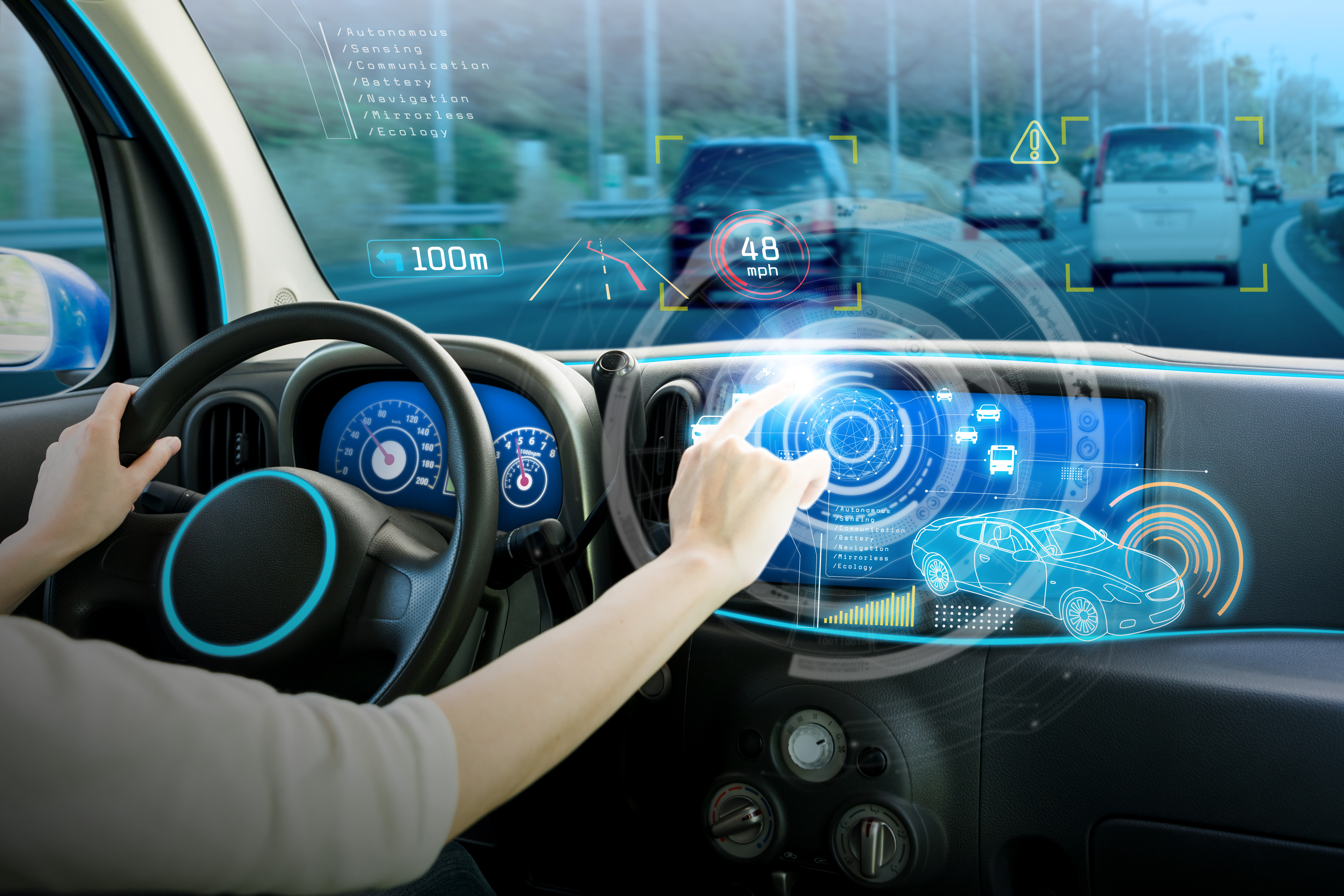
vehicle cockpit and screen, car electronics, automotive technology, autonomous car, abstract visual image
New Developments in Radar, Lidar, and Camera Sensors
An overview of the most important new developments from 2024:
- Radar Innovation: 4D Imaging Radar-on-Chip combines an antenna, front end, and AI accelerator, provides elevation data, and reduces the bill of materials by 40%.
- Lidar Update: Solid-state lidar with FMCW technology reduces costs to under €500 and detects dark objects against the light at a distance of 250 m.
- Camera Advancements: HDR CMOS with integrated edge AI analyzes traffic signs in real time, reduces glare, and improves night vision.
To ensure consistent performance of this generation of sensors, we recommend our narrowband flat absorbers and wideband flat absorbers, which reliably reduce unwanted reflections in the target band by up to 20 dB.
Ultrasound and Other Tools for Close-Range Applications
An Automotive ultrasonic sensor detects curbs or bicycles within five meters. In addition, interior radar is used for drowsiness detection, and IR sensors are used for driver monitoring. However, each additional component increases the Reflection characteristics inside the vehicle and ensures proper shielding necessary.
High-frequency risks and stricter approval tests
New homologation guidelines require stable radar and lidar signals—even after temperature cycling, vibration, and exposure to humidity. Even a single poorly designed housing edge can generate multipath echoes at 77 GHz, which testing laboratories will immediately flag as a defect. Custom-designed microwave absorbers, such as our Cavity absorberseliminate such reflections, reduce the emission level by up to 20 dB, and shorten the approval time.
New Products for 2024/25 – Radar-on-Chip & Solid-State Lidar
Automotive suppliers are introducing the first Radar-on-Chip-Modules with embedded AI are hitting the market; they cut the bill of materials in half and improve angular resolution. At the same time, startups are lowering the unit costs for Solid-State Lidar less than 500 euros, which enables its use in Level 3 vehicles. A new fifth-generation ultrasonic sensor now detects obstacles up to 6 m away—which is helpful for automatic parking functions. All of these innovations require more precise testing, in which our narrowband and cavity absorbers provide reproducible attenuation of –20 dB.
Learn more about HF absorbers: You can find the complete product family here – HF Absorber Solutions. For more background information on sensor technology, see the article Sensors & Autonomous Driving.
– Geschäftsführer E. S. Electronic Service GmbH